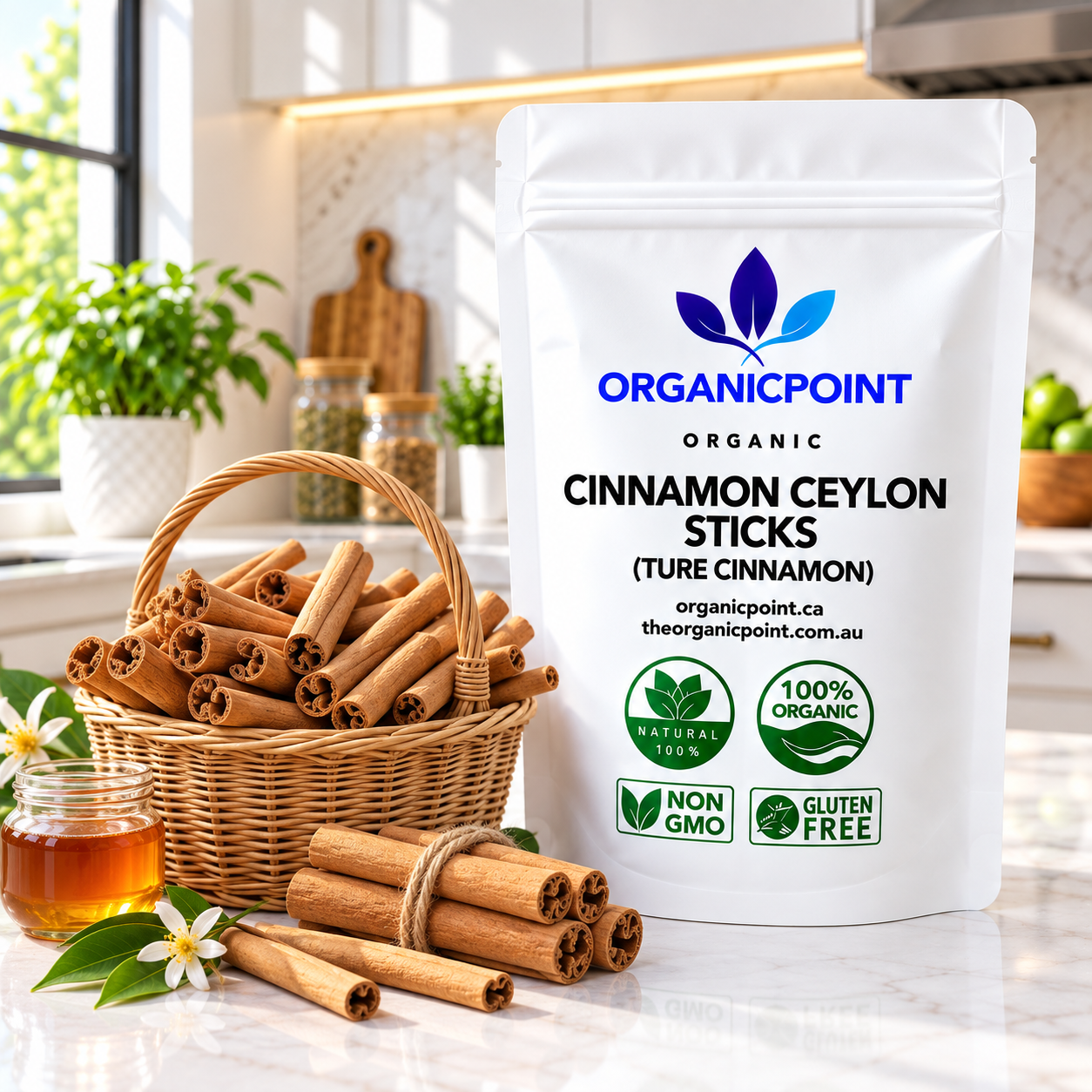

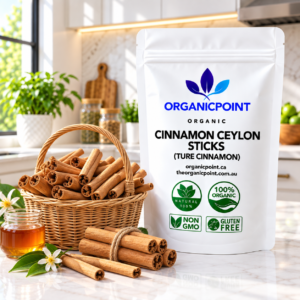

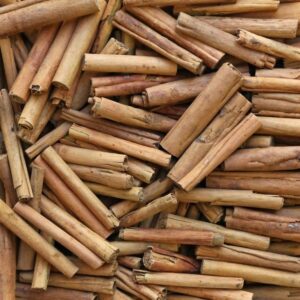
Organic Cinnamon Ceylon Sticks, True, Sweet
- Botanical name: Cinnamomum verum/Cinnamomum zeylanicum
- Origin: Sri Lanka
- Certified Organic
- Premium quality pure Ceylon cinnamon powder
- Light, refined taste with a gentle aromatic profile
- Extra-fine texture for convenient everyday use
- Sourced from authentic Ceylon cinnamon bark
- Ideal for a wide range of sweet and savory dishes
- Brings rich flavor and natural warmth to every recipe

- Description
- Ingredients
- Storage
- Disclaimer
- Difference Between Ceylon(True) Cinnamon and Cassia Cinnamon
General Information
Botanical Name: Cinnamomum verum/Cinnamomum zeylanicum
Certified Organic
Origin: Sri Lanka
Production
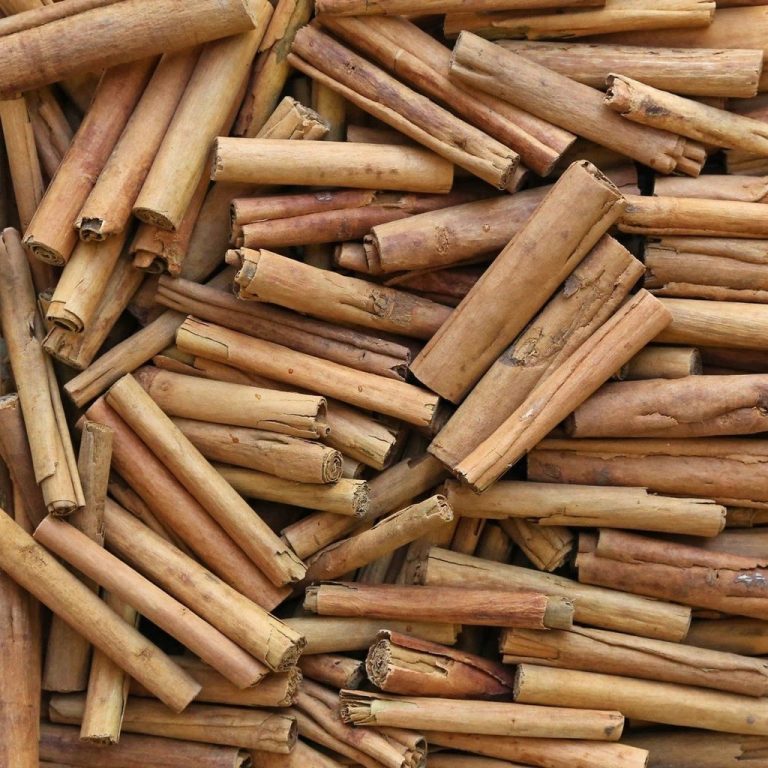
True cinnamon has several thin layers shaved from the inner bark of the tree, unlike the more common cassia cinnamon, which is thicker and curls from both sides inward.
Qualities
True cinnamon, also known as sweet cinnamon, Xi Lan Rou Gui, Ceylon, or Zeylonicum cinnamon, is a popular spice used in many versatile ways throughout history. Cinnamon is widely popular and known for its slightly sweet, delicious, and spicy warming flavor commonly found in baked goods, teas, and spice mixes. True cinnamon has a more subtle, delicate, and less sweet flavor than the closely related cassia cinnamon. One of the main differences between these two types of cinnamon is that cassia contains higher concentrations of coumarin, which in high doses, can have a negative impact on liver and kidney health. Otherwise, many of their medicinal qualities are the same, as they are so closely related.
Cinnamon, along with it’s exceptional and unique flavor, is a highly valued and multipurpose medicinal herb used for circulatory, respiratory, and expectorant applications. It is also used to aid in the digestive process and enhance metabolic function. Many cultures have used cinnamon in their health practices topically and internally throughout history.
Common use
True cinnamon bark can easily be broken into pieces and freshly ground in a spice/coffee grinder and used as a powder in a very wide range of applications from sprinkling on your oatmeal or cereal, in baked goods, smoothies, as an extract or tea, or ingested in capsules. Its earthy yet appealing flavor makes it a healthful staple in almost every spice cabinet.
Ingredients
100% Organic Cinnamon Sticks, True, Sweet
Storage
Store in a cool, dark, dry place in a sealed container.
Disclaimer
This information is for educational purposes only and has not been evaluated by the FDA or CFIA. It is not intended to diagnose, treat, cure, or prevent any disease. This product has been packaged in the same facility as peanuts, tree nuts, wheat, soy, and other potential allergens.
Difference Between Ceylon(True) Cinnamon and Cassia Cinnamon
The main difference is that Ceylon cinnamon (“true cinnamon”) and cassia cinnamon come from different tree species, giving them different flavors, textures, and levels of a naturally occurring compound called coumarin.
| Feature | Ceylon cinnamon | Cassia cinnamon |
|---|---|---|
| Origin | Sri Lanka (primarily), southern India | China, Indonesia, Vietnam |
| Scientific name | Cinnamomum verum | Cinnamomum cassia, C. burmannii, C. loureiroi |
| Flavor | Mild, sweet, delicate, citrusy | Strong, spicy, pungent |
| Color | Light tan | Dark reddish-brown |
| Bark | Thin, papery layers that crumble easily | Thick, hard, single-layer bark |
| Coumarin content | Very low | Much higher |
Flavor
- Ceylon has a subtle, sweet flavor that works well in desserts, oatmeal, fruit, and tea.
- Cassia has the bold cinnamon taste most people associate with cinnamon rolls, pumpkin pie, and spice blends.
Health considerations
The biggest nutritional difference is coumarin.
- Ceylon cinnamon: Contains very little coumarin, so it’s generally the better choice if you use cinnamon daily or in larger amounts.
- Cassia cinnamon: Contains significantly more coumarin. Regularly consuming large amounts over long periods may increase the risk of liver damage in susceptible people.
For occasional culinary use, cassia is generally considered safe. If you’re taking cinnamon supplements or adding cinnamon to your diet every day, Ceylon is usually the preferred option.
Price
- Ceylon is more expensive because it’s harder to harvest and process.
- Cassia is cheaper and is the type most commonly sold in supermarkets in North America.
How to tell them apart
- Ceylon sticks look like tightly rolled cigars made of many thin layers and break easily.
- Cassia sticks are thick, hard, and usually curl inward from one or both sides.
Which should you buy?
- Choose Ceylon if: You consume cinnamon every day, want a milder flavor, or are buying it for potential health benefits.
- Choose cassia if: You want the classic strong cinnamon flavor for baking and don’t consume large amounts regularly.
In many grocery stores, if the label simply says “ground cinnamon”, it is usually cassia, unless it specifically states “Ceylon cinnamon” or “true cinnamon.”